
Copper Strip for Transformer Windings
Copper strip in C1100 for transformer manufacturing, assembly, maintenance and repair. Same oxygen-free electrolytic base as the foil, in the heavier formats that suit high current windings, busbar connections and rewind work: 0.2 to 3.0 mm thick, 50 to 1350 mm wide, conductivity 99 %IACS or higher.
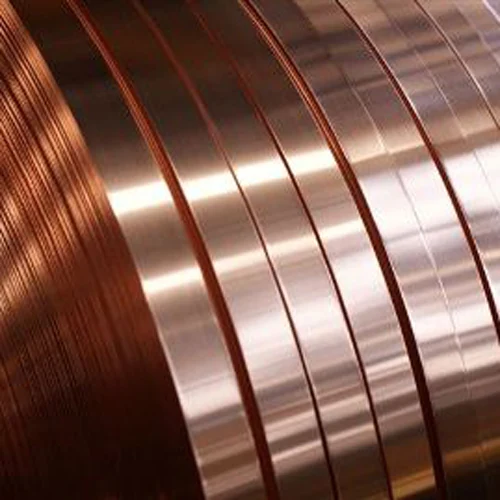
Production scope and material data
| Alloy | C1100 |
|---|---|
| Thickness | 0.2 - 3.0 mm |
| Width | 50 - 1350 mm |
| Inner diameter | 300 / 400 / 500 mm or customised |
| Copper content | 99% minimum, oxygen-free grade 99.95% or higher |
| Conductivity | 99 %IACS minimum |
| Tensile strength | Above 193 MPa |
| Standards | IEC, BIS and ASTM practice |
| Edge condition | Round edge, no burrs, no scratches |
Problems this solves
- Rewind jobs held up because the original strip size is no longer a catalogue item
- Edge burrs that tear insulation tape during forming and bending
- Inconsistent tensile strength causing cracking where the strip is bent to a connection
- Suppliers who will not quote a single coil for a repair
Why buyers pick it
- Oxygen-free electrolytic copper, oxygen below 0.02%, purity 99.95% or higher
- Conductivity 99 %IACS or higher and tensile strength above 193 MPa
- Supplied against IEC, BIS and ASTM practice alongside international standards
- Inner diameter 300, 400 or 500 mm, or customised to your decoiler
- Single-coil quantities accepted for repair and prototype work
Technical detail
Dimensional control over width, thickness and length follows the transformer design tolerance rather than a general commercial band. Mechanical properties are set so that the strip takes bending and forming at a connection without cracking, and electrical conductivity is held at the level the winding was calculated against.
Quality control
Strip is inspected for dimension, edge condition and surface before packing, and packed so that bending, scratching or other physical damage does not happen in transit. Handling instructions travel with the coil.
Customisation
Thickness, width, inner diameter and coil weight to order, with support from transformer manufacturing through assembly, maintenance and repair rather than a single production batch.
How it compares
Strip and foil share the same C1100 production scope. Strip is the format for heavier gauges, connections and busbar work; foil is the format for thin full-width turns in a wound low voltage coil.
Who it is for
Transformer plants, switchgear and busbar fabricators, and service companies handling transformer maintenance and repair.
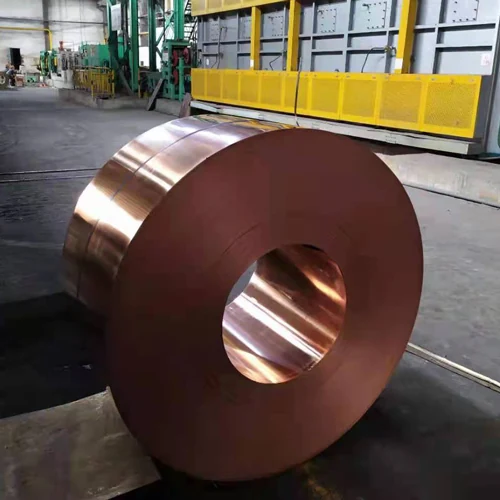
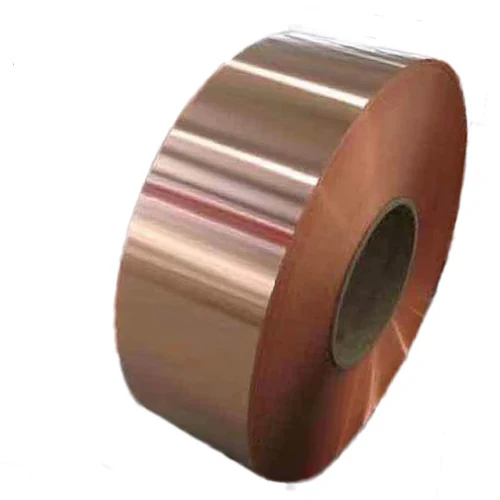
The material as it ships
Questions buyers ask about this item
What is the difference between your copper strip and copper foil?
They come from the same C1100 production scope. Strip covers the heavier gauges and connection work, foil the thin full-width turns in a wound coil.
Which standards do you work to?
International standards, and compliance with IEC, BIS and ASTM.
Can you supply a single coil for a repair?
Yes. There is no minimum order quantity, though some items carry a minimum production run which is stated in the quotation.
What inner diameters are standard?
300, 400 and 500 mm, or customised.
How is the strip packed?
In wooden crates or plastic wrapping chosen to prevent bending and scratching, with handling instructions supplied.
How do you ship?
By sea, air or land freight, whichever suits the quantity and the deadline.
Related material
Aluminium Foil for Transformer Windings
Thickness: 0.2 - 3.00 mm · Width: 20 - 1500 mm
View specification →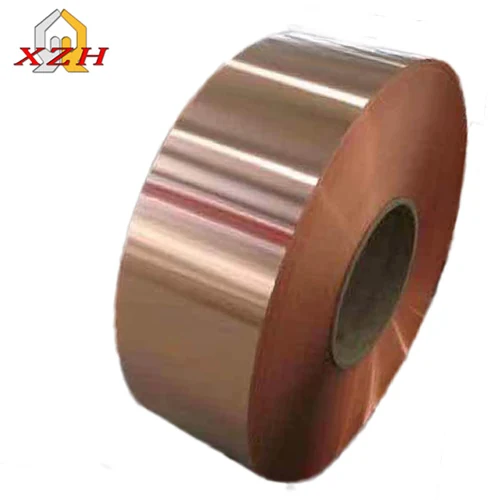
Copper Foil for Transformer Windings
Thickness: 0.2 - 3.0 mm · Width: 50 - 1350 mm
View specification →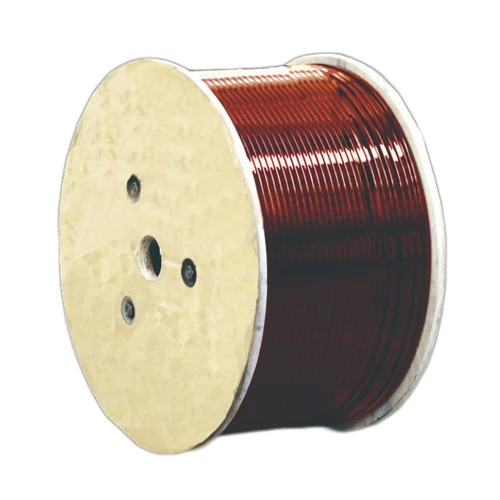
Enamelled Rectangular Wire for Transformers
Conductor width (b): 2.00 - 16.00 mm · Width to thickness ratio: 1.4:1
View specification →Further reading
Ready to price this against your drawing?
Code or alloy, inner diameter, thickness, width and weight is all the sales desk needs to quote.