
Industrial Honeycomb SCR Catalyst
Product Overview
The SCR (Selective catalytic reduction) technology is denitration catalyst in the appropriate temperature, using ammonia (NH3) as the reducing agent, take the advantage of the reducing agent selective, preferentially reaction with industrial flue gas of nitrogen oxide(NOX), NOX is converted into no pollution of nitrogen and water, and NOx reduction efficiency is as high as above 90%. Thereby reducing NOX emissions, and reducing smoke pollution to the environment. SCR denitration technology has become the mainstream technology of flue gas denitrification in the world.
At present, the commercial SCR catalysts are basically using TiO2 as base material and V2O5 as the main active ingredient, with WO3 and MoO3 as anti-oxidation and anti-poisoning auxiliary components.
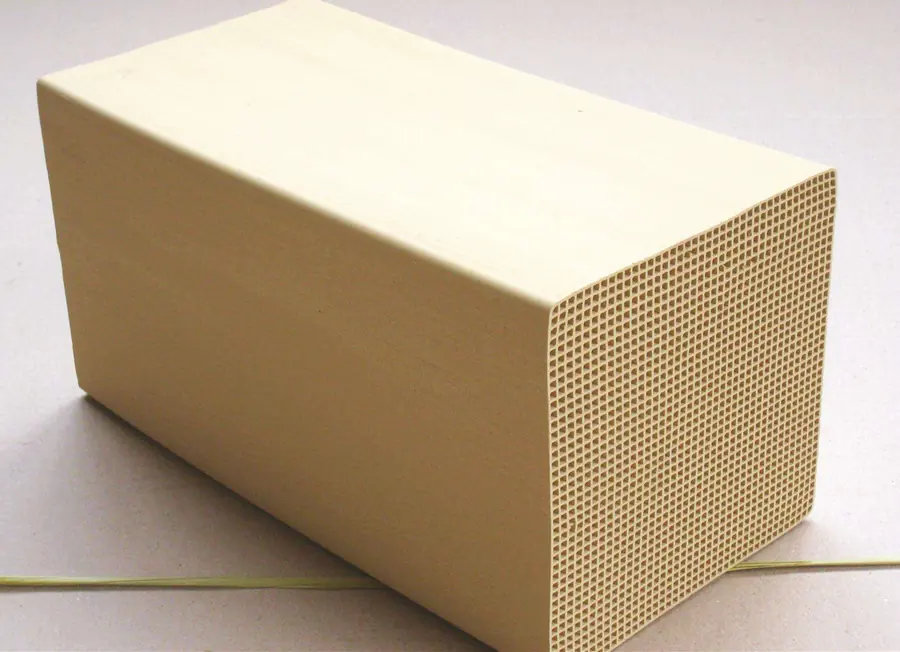
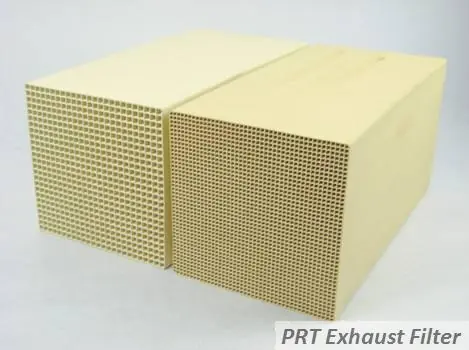
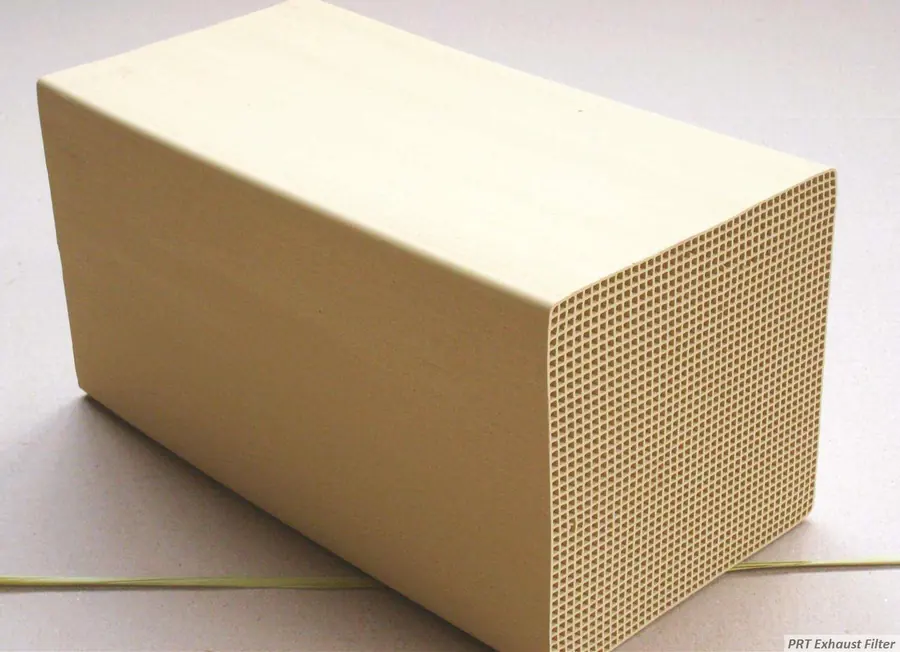
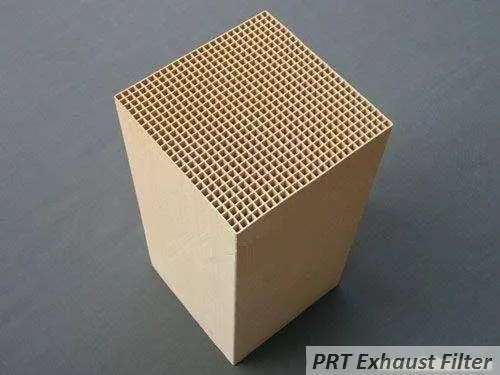
PRUITING® Industrial Honeycomb SCR catalyst is a porous honeycomb homogeneous product, its main backing material is TiO2, WO3,V2O5 and so on.
Typical industrial applications:
It is widely used in thermal power plants, coal-fired power plants, waste incineration plants, steel plants, fertilizer plants, nitric acid plants, cement plants, petrochemical chemical plants and other all industrial which need to reduce the NOx emissions, also used in diesel engines tail gas treatment etc..
According to the customer's requirements, we can produce different pitch and formulations of honeycomb SCR catalyst.
Key Benefits
Technical Features and Key Benefits
- NOx reduction efficiency as high as above 90%
- Porous honeycomb homogeneous product with main backing material TiO2, WO3 and V2O5
- Converts NOx into non-polluting nitrogen and water
- Grades available for high, medium, low and very low smoke dust coal fired units
- Different pitch and formulations can be produced to customer requirements
Who It Is For
Buyers Who Specify This Product
- Thermal power plants and coal-fired power plants
- Waste incineration plants, steel plants and cement plants
- Fertilizer, nitric acid and petrochemical chemical plants
Problems It Solves
What It Fixes in the Exhaust Line
- NOx emissions that have to be brought below the permitted limit
- Smoke pollution released to the environment
- Catalyst poisoning and oxidation in aggressive flue gas
Specifications
Published Sizes and Technical Data
Specifications for PRUITING'S Industrial Honeycomb SCR catalyst
| Hole Number (PCS) | Cross Section (mm) | Hole Dia. (mm) | Wall Thickness (mm) | Catalyst Pitch (mm) | Open Porosity (%) | Specific Surface Area (m2/m3) | Applicable Scope |
|---|---|---|---|---|---|---|---|
| 15×15 | 150×150 | 8.45 | 1.35 | 9.80 | 71.40 | 338 | Coal fired unit, high smoke dust |
| 16×16 | 150×150 | 8.00 | 1.20 | 9.20 | 72.82 | 383 | |
| 18×18 | 150×150 | 7.10 | 1.10 | 8.20 | 72.60 | 409 | Coal fired unit, medium dust |
| 20×20 | 150×150 | 6.40 | 1.00 | 7.40 | 72.82 | 469 | |
| 21×21 | 150×150 | 6.10 | 0.95 | 7.05 | 72.93 | 478 | Coal fired unit, low smoke dust |
| 22×22 | 150×150 | 5.80 | 0.90 | 6.70 | 72.36 | 499 | |
| 25×25 | 150×150 | 5.00 | 0.90 | 5.90 | 69.44 | 577 | Coal fired unit, very low dust |
| 30×30 | 150×150 | 4.10 | 0.80 | 4.90 | 67.24 | 693 | Oil fired unit, very low dust |
| 35×35 | 150×150 | 3.65 | 0.55 | 4.20 | 72.53 | 795 | |
| 40×40 | 150×150 | 3.20 | 0.50 | 3.70 | 72.82 | 910 | Natural gas fired unit |
| 45×45 | 150×150 | 2.78 | 0.50 | 3.28 | 69.56 | 1000 | |
| 55×55 | 150×150 | 2.20 | 0.50 | 2.70 | 65.07 | 1275 | |
| Unit catalyst size: 150×150×(length 50-1350) mm. |
Figures above are reproduced from the PRT published specification. Dimensions in mm unless stated otherwise. Ø denotes diameter.
FAQ
Industrial SCR Catalyst FAQ
How does SCR denitration work?
At an appropriate temperature the denitration catalyst uses ammonia (NH3) as the reducing agent. Taking advantage of the reducing agent selectivity, it reacts preferentially with the nitrogen oxides in the industrial flue gas, converting NOx into nitrogen and water.
What NOx reduction efficiency is achieved?
NOx reduction efficiency is as high as above 90 percent.
What is the catalyst made from?
Commercial SCR catalysts basically use TiO2 as base material and V2O5 as the main active ingredient, with WO3 and MoO3 as anti-oxidation and anti-poisoning auxiliary components. The PRT honeycomb SCR catalyst backing material is TiO2, WO3, V2O5 and so on.
Which industries use it?
It is widely used in thermal power plants, coal-fired power plants, waste incineration plants, steel plants, fertilizer plants, nitric acid plants, cement plants and petrochemical chemical plants, and also in diesel engine tail gas treatment.
Can the pitch be customised?
According to the customer's requirements we can produce different pitch and formulations of honeycomb SCR catalyst.
Related Products

