
Industrial Flue Gas and Thermal Processing
Honeycomb SCR denitration catalyst and ceramic heat accumulation media for power generation, incineration, metallurgy and chemical process plants.
Industry Pain Points
What Makes This Application Hard
- NOx emissions from industrial flue gas have to be reduced to meet the permitted limits.
- Heat lost from furnaces and thermal processes has to be recovered by a heat storage and heat exchange medium.
- Media and catalyst have to survive thermal cycling and chemical corrosion in the flue gas stream.
What PRT Publishes
Capability Statements from the Catalogue
- SCR denitration technology has become the mainstream technology of flue gas denitrification in the world, with NOx reduction efficiency above 90 percent.
- The honeycomb SCR catalyst is used in thermal power plants, coal-fired power plants, waste incineration plants, steel plants, fertilizer plants, nitric acid plants, cement plants and petrochemical chemical plants.
- Ceramic honeycomb heat storage media is widely applied in metallurgy, petroleum and chemical industry, electric power and boiler applications.
- The SiC diesel particulate filter can also be used in environment protection, petro-chemistry, medicine manufacture and metallurgy.
Recommended Products
Products Used in This Application
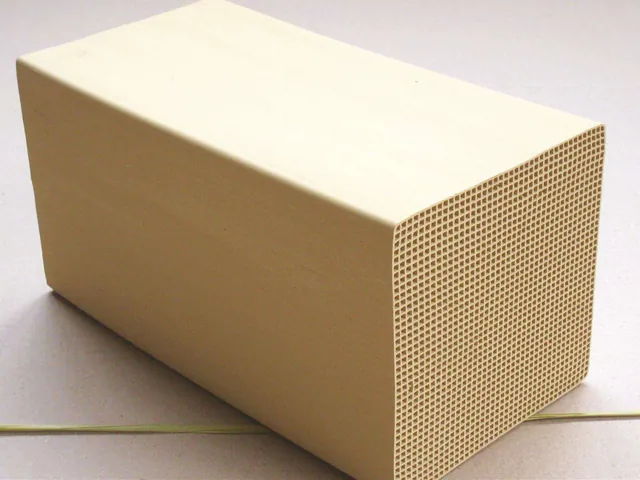
Industrial SCR Catalyst
Honeycomb SCR denitration catalyst on TiO2, WO3 and V2O5, NOx reduction above 90%.
View Product →
Ceramic Heat Accumulation Substrate
Honeycomb heat storage media in cordierite and mullite families, wall thickness 0.5mm to 5mm.
View Product →
SiC DPF Substrate
Silicon carbide diesel particulate filter, carbon particulate filtration efficiency above 90%.
View Product →Other Applications
Explore the Other Industry Pages
Automotive and On-Road Vehicles
Three-way catalysts for gasoline vehicles, oxidation catalysts and particulate filters for on-road diesel, built on PRT ceramic and metallic carriers.
Off-Road Construction and Mining
Diesel oxidation catalysts and particulate filters for off-road construction and mining equipment, where duty cycles are long and regeneration management matters.
FAQ
Frequently Asked Questions
Which SCR grade suits our dust load?
The specification table lists hole numbers from 15x15 to 30x30 with applicable scope from coal fired units with high smoke dust through to very low dust.
Can the catalyst pitch be changed?
According to the customer's requirements we can produce different pitch and formulations of honeycomb SCR catalyst.
What is the maximum working temperature of the heat accumulation media?
The cordierite heat accumulation substrate is published with a maximum working temperature of 1320 °C.